Services
Why does my kitchen sink keep clogging?
Kitchen sinks clog because grease goes down warm and liquid, then cools and sets on the pipe wall a few feet along. Food, coffee grounds and soap stick to that layer, and the opening shrinks week by week. A cable can open the line, but only jetting scrubs the coating off.
Grease. Bacon fat, cooking oil, butter and the film off a roasting pan all go down warm and liquid. A few feet along the pipe they cool and set like candle wax. Rice, pasta, coffee grounds and eggshell stick to that layer, and the opening gets smaller every week.
The garbage disposal doesn't prevent this. It grinds food small enough to leave the sink. Then the pieces settle in the flat run of pipe behind the wall, right where the grease is.
Two things to check under the sink
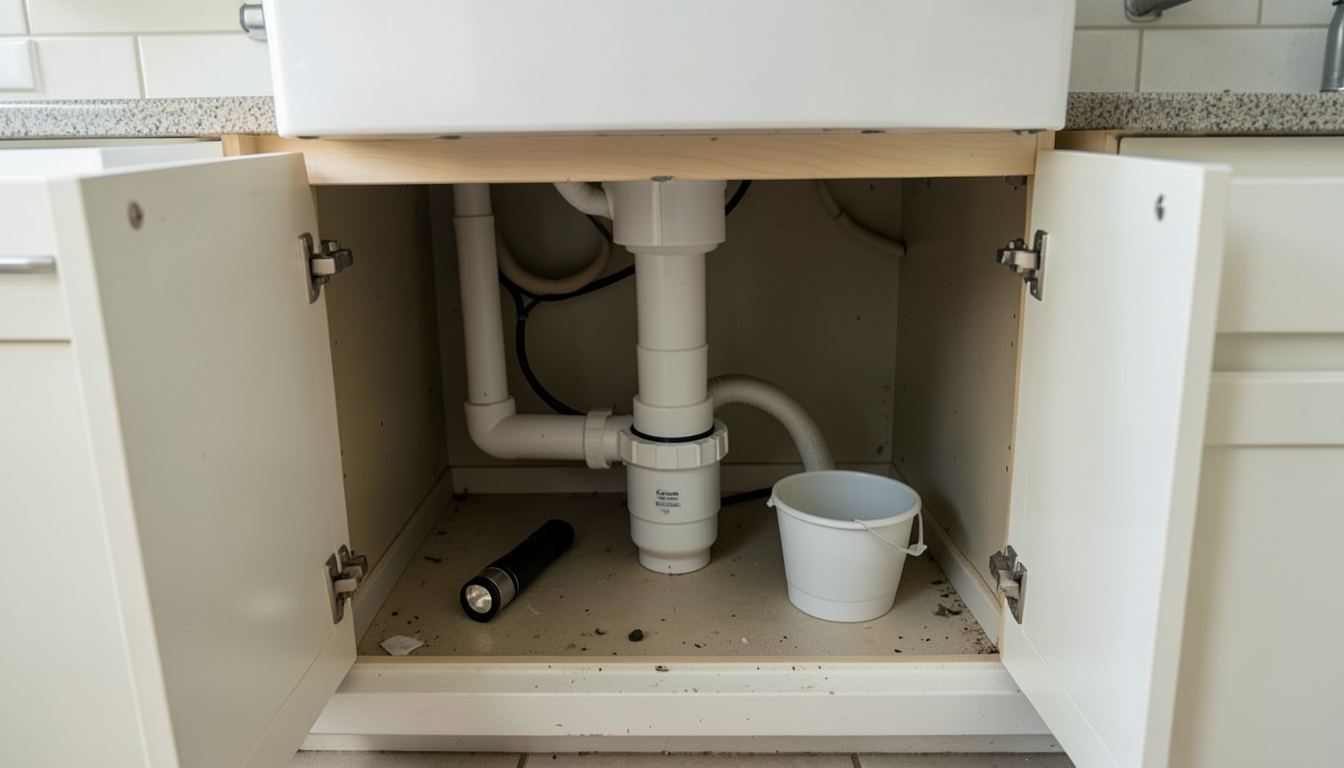
Open the cabinet. The U-shaped pipe under the drain is the trap. It holds a little water to block sewer gas, and it catches whatever is heavy. Put a bucket under it, unscrew the two slip nuts by hand and empty it. If the trap was packed, you may have just fixed the sink.
On a double sink, run water in one side. If it comes up in the other side, the clog is past the point where the two drains join, in the wall or beyond. If the sink backs up when the dishwasher drains, same story. That's the part a cable is for.
How we clear a kitchen line
The trap comes off and the cable goes into the pipe in the wall, not down through the sink. It runs until it's through the clog and into the wider pipe beyond it, then gets pulled back and wiped down. We run hot water for a few minutes afterwards to make sure the line carries a full sink.
A kitchen line that clogs again a few months later is usually coated end to end. A cable can't clean that off. Hydro jetting can.
Keeping it clear
Wipe greasy pans with a paper towel before you wash them, and pour cooled fat into a can instead of the sink. Run plenty of water with the disposal and for a few seconds after. On a septic system this matters twice. The EPA's septic guidance says never to pour cooking oil or grease down the drain.