Services
What is hydro jetting?
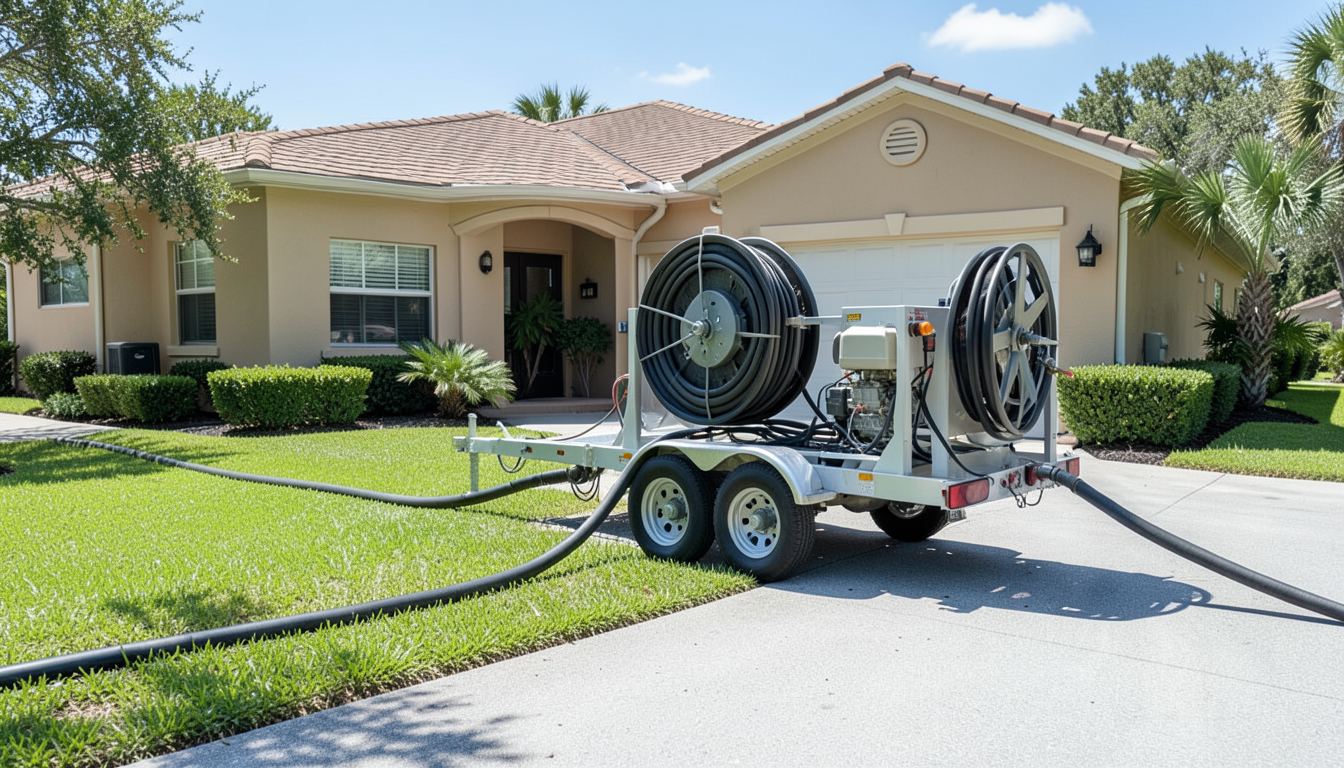
Hydro jetting is cleaning a drain or sewer line with high-pressure water instead of a cable. A pump pushes water through a hose to a nozzle that scours grease, sludge and fine roots off the whole pipe wall, not just through the middle of the clog. It suits coated kitchen lines and main lines.
A jetter is a pump, a long hose and a nozzle. The pump pushes water through the hose at thousands of pounds per square inch. The nozzle has one jet pointing forward to break into the blockage and a ring of jets pointing backward. Those rear jets do two jobs. They pull the hose down the pipe, and they scour the wall all the way around as it goes.
Everything that comes loose gets flushed down the line with the water. Nothing is added except water.
When jetting beats a cable
Jetting earns its keep in three situations.
- A kitchen line that clogs again every few months because the whole pipe is coated with grease
- A main line with sludge, sand or scale built up along the bottom
- Fine roots across a line that a cutter head has already opened, where the jet clears what the blade left
What comes back out
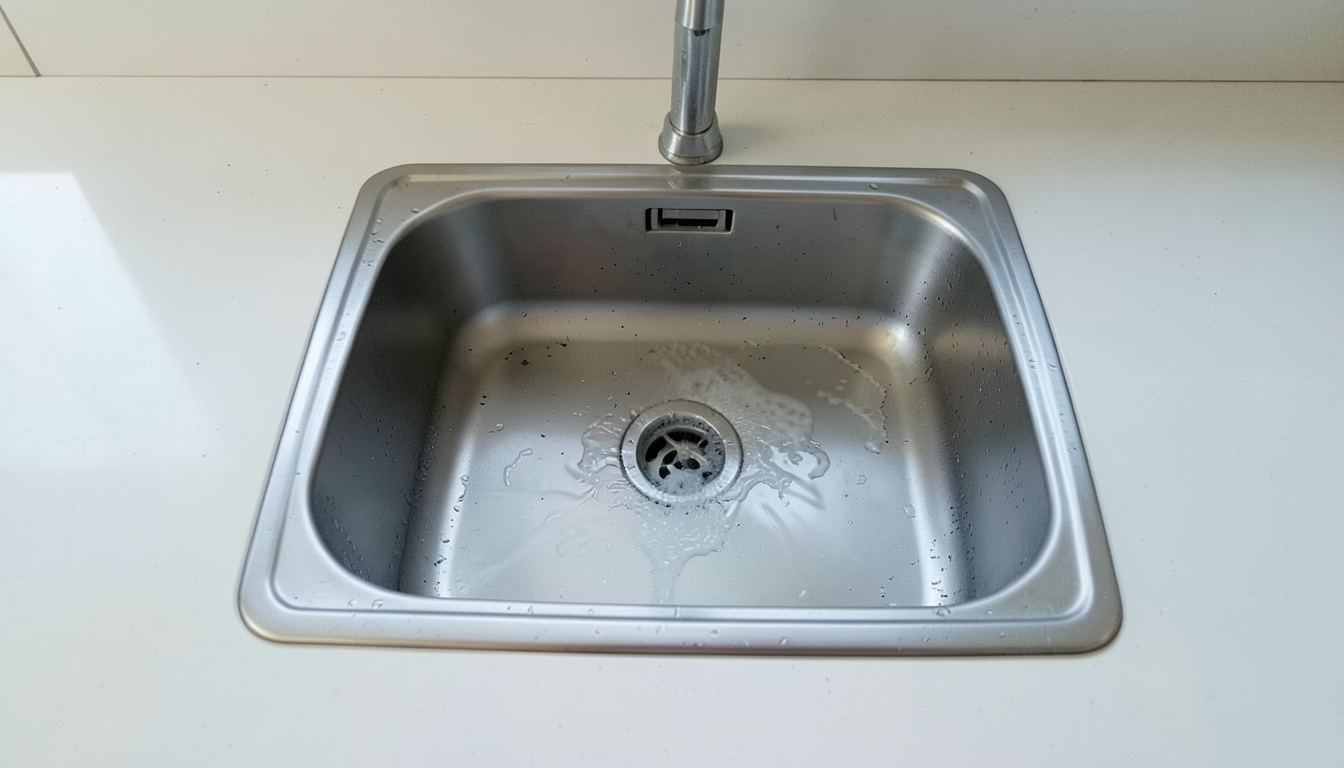
After a jet pass, the water that comes out the other end tells you what was in the line. Grease shows up as a pale, waxy slurry. Scale from old iron comes out as dark grit. Fine roots come out as short strings. We'll tell you what we saw so you know what you're dealing with.
When it's the wrong tool
A single clogged toilet or a shower full of hair doesn't need a jetter. A cable is quicker and does the job.
Jetting also needs a pipe that can take it. Old cast iron that has rusted thin, or a line that is already cracked or separated, can be made worse by high-pressure water. If we have doubts about a pipe, we'll say so and stay with a cable. Checking the inside of the pipe is something a licensed plumber can do for you.
What we need to jet a line
Access, mainly. Jetting goes in through a cleanout, and the line has to be open enough to carry the water away, so a fully blocked pipe usually gets a cable first. Tell us whether the house has a cleanout and whether it's on sewer or septic when you call (321) 604-1285.