Last reviewed November 16, 2026. General information, not legal or professional advice. Check the linked sources for the current rules.
Guide
Does liquid drain cleaner work?
Liquid drain cleaner can work on a small clog of hair and soap near the drain, and it often fails on anything else. Most are strong lye, which can't dissolve wipes, toys, roots or sand, and can't get past the water in a toilet. When it fails, the caustic liquid stays in your pipe.
Most liquid and gel drain openers are strong lye. That's sodium hydroxide, sometimes mixed with bleach. Crystal products are the same chemical in dry form. A few products sold for heavy clogs are sulfuric acid instead.
Lye is not a mild chemical. The federal toxic substances agency describes sodium hydroxide as very corrosive and says it can cause severe burns in all tissues that come in contact with it (CDC / ATSDR). It works by turning grease into soap and breaking down hair, and it makes heat while it does.
When it works and when it doesn't
Chemical cleaner has to reach the clog to work on it, and it has to be the right kind of clog.
| Situation | Will the bottle help? |
|---|---|
| Slow bathroom sink or shower, hair and soap near the drain | Often, yes |
| Slow kitchen sink, light grease | Sometimes, for a while |
| Drain fully stopped with standing water | Rarely. It gets diluted and sits on top of the clog |
| Toilet | No. It can't get past the water in the bowl |
| Several drains slow at once | No. The clog is far down the main line |
| Wipes, a toy, roots, sand | No. Nothing in the bottle dissolves them |
The problem when it fails
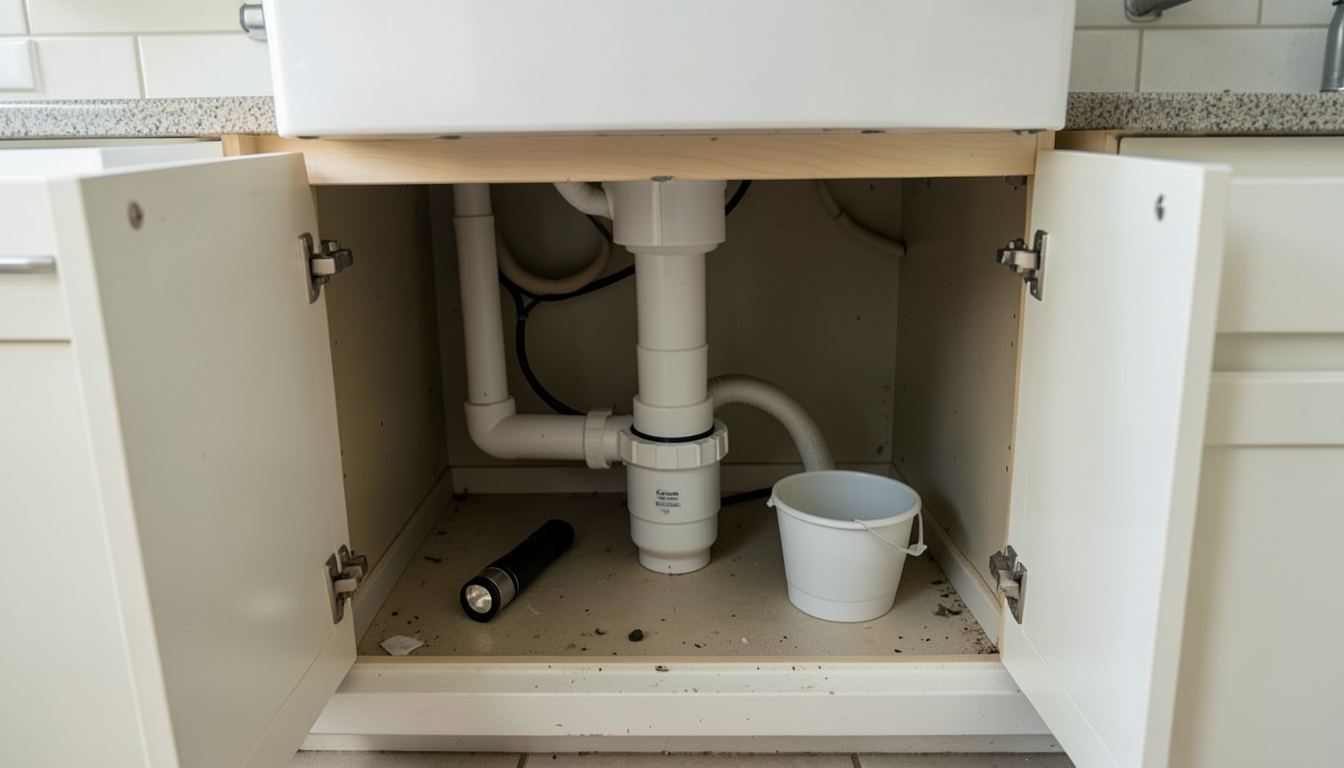
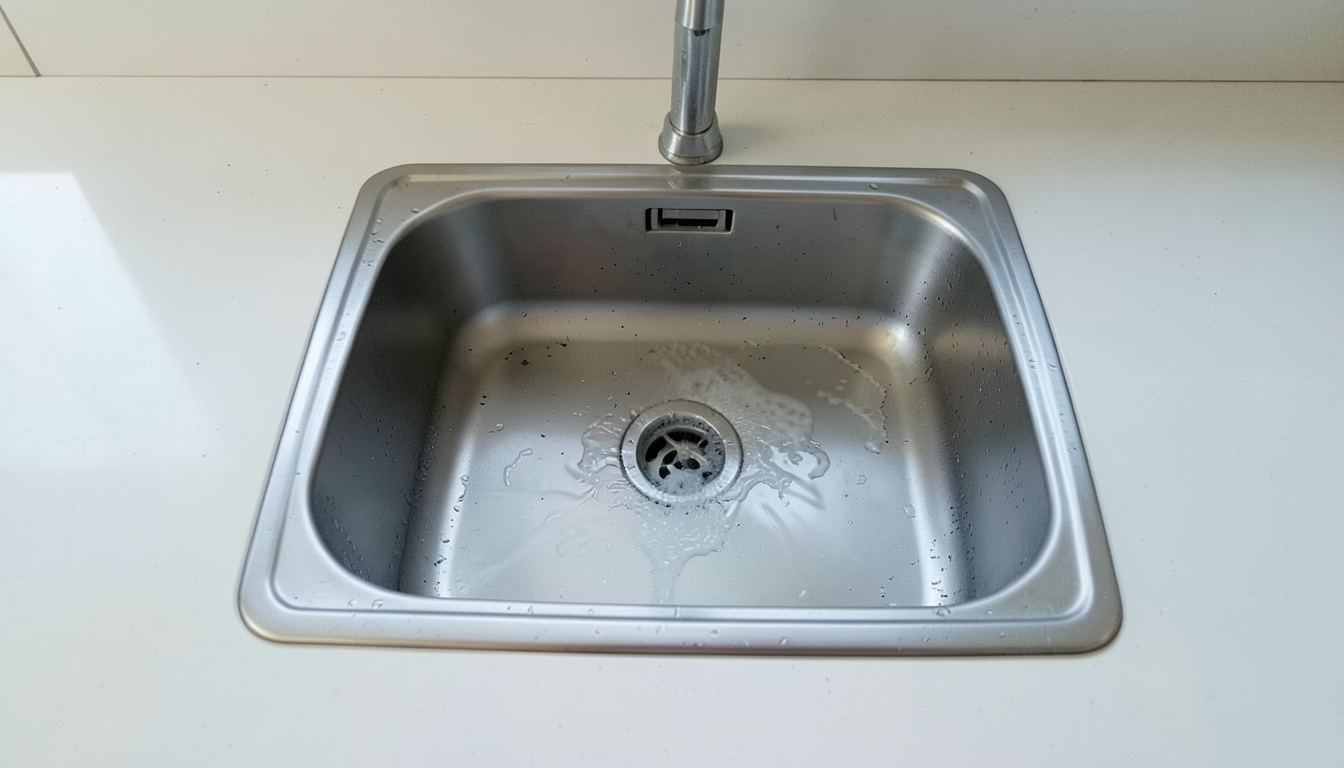
If the clog doesn't move, the cleaner stays where you poured it. Now the sink or tub is full of caustic water. Plunging splashes it. Taking the trap off pours it into your bucket and over your hands. And whoever opens that drain next needs to know what's in it.
So two rules. Never mix products, and never follow one cleaner with another. Bleach and acid together make a toxic gas. And if you do call someone, tell them what you poured in and when. That is why one of the first questions on the phone is what was poured in.
Enzyme cleaners, and baking soda
Enzyme and bacterial drain cleaners are a different product. They use bacteria that slowly eat the organic film on the pipe wall. They're gentle on pipes and fine for septic systems, and they're slow. Think overnight, used every month, to keep a drain from building up. They don't open a drain that's already stopped.
Baking soda and vinegar fizz, which looks like progress. The fizz is carbon dioxide and what's left is salty water. It can freshen a drain and loosen a light film. It won't move a real clog.
If the house is on septic
A septic tank works because bacteria in it break down waste. The EPA tells septic owners to avoid chemical drain openers for a clogged drain and to use boiling water or a drain snake instead (EPA). Boiling water is fine in a metal sink. Use hot tap water in a toilet or with plastic pipe.
What to try before the bottle
In order, from least effort to most.
- Pull the stopper or drain cover and take out what you can see
- Plunge it. Use a cup plunger on a sink or tub with the overflow hole covered by a wet rag, and a flange plunger on a toilet
- Empty the trap under the sink into a bucket
- Run a hand snake. Our guide on how to snake a drain has the steps
When to call
If you've done the list above and the water still stands, or more than one drain is slow, a cable sized to the pipe is the next step. Call (321) 604-1285 or request a quote. Mention any cleaner you used.