Services
What is sewer line cleaning, and how is it different from repair?
Sewer line cleaning removes what is blocking the main pipe, such as roots, grease, paper and wipes, using a cable or a water jet through the cleanout. Repair fixes the pipe itself: a crack, a sag, a collapse or a bad joint. Cleaning can't fix a damaged pipe, and repair is work we don't do.
Think of cleaning as unclogging and repair as fixing the pipe that clogged. Cleaning is what we do. If the cable finds a crack, a sag or a collapse, we tell you how far in it stopped, and you take that to a licensed plumber.
Signs it's the main line
One slow drain is a local clog. These point further down.
- More than one fixture is slow or stopped at the same time
- Flushing a toilet makes the tub or shower gurgle, or water rises in it
- The washing machine drains and water comes up in a shower or a floor drain
- Toilets bubble when a sink empties
- Water or waste seeps out around the cleanout cap outside
The cleanout
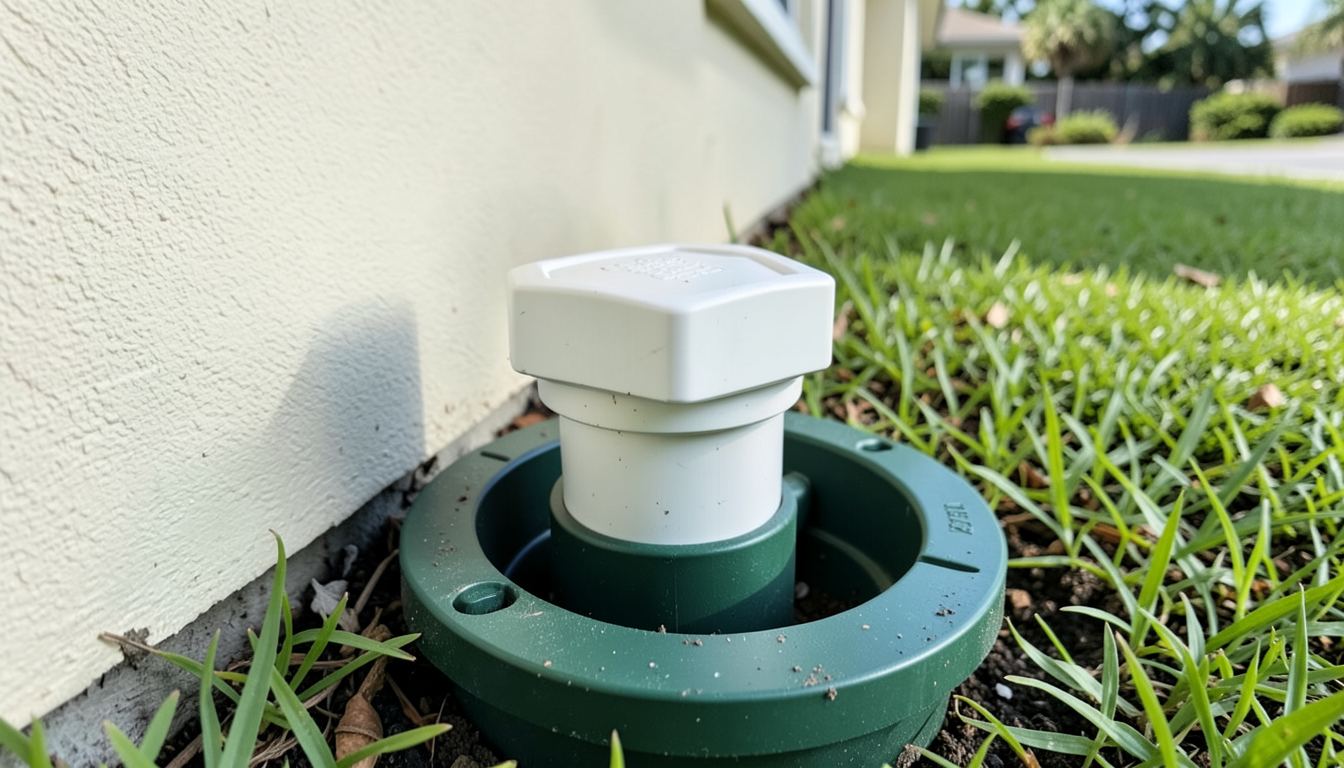
The cleanout is the way into the main line. It's a capped pipe, three or four inches wide, usually white plastic with a square nut on top. Look near the outside wall closest to the bathrooms or the kitchen. Some houses have a second one close to the street. In older houses it may be buried under mulch or sod, or there may not be one at all.
If you find it and the house is backing up, don't open it yourself with the line full. Whatever is in the pipe will come out of the cap.
How a main line gets cleared
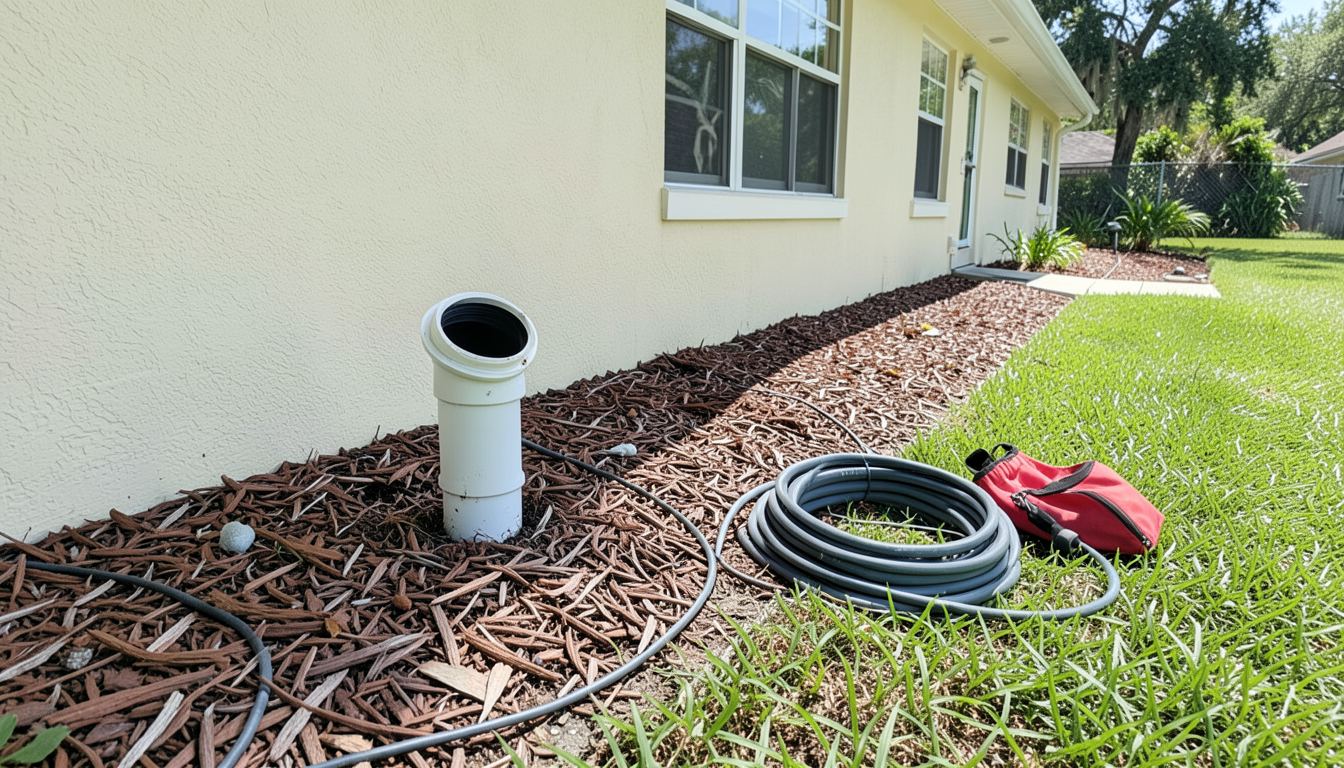
A heavy cable goes in at the cleanout with a cutting head on the end. It runs toward the street, or toward the tank on a septic system, until it reaches the blockage and chews through. Then it goes past, to be sure the whole run is open, and comes back out. We run water from inside the house to check that it carries.
What comes back on the cutter tells part of the story. Paper and wipes mean something is catching them. Fine roots mean a joint has opened somewhere. Thick black sludge points to a low spot where waste sits.
What cleaning can't fix
Roots grow back. A cable cuts them off inside the pipe, but the gap they came through is still there. Old cast iron and clay lines also crack, sag and sometimes collapse, and no amount of cleaning changes that.
If the cable won't pass a spot, or the line blocks again within weeks, the pipe needs a licensed plumber to look at it and a permit from your city or the county for the fix. We don't do that work. We'll tell you how far in the cable stopped so you have something to go on.
Sewer or septic?
On city or county sewer, your line runs to a main under the street. The line on your property is generally yours to keep clear, and the main is the utility's. If neighbors are backing up too, call the utility before you call anyone else.
On a septic system, the line runs to a tank in the yard. If every drain is slow and the tank hasn't been pumped in years, a septic company should check the tank first. We don't pump septic tanks.