Last reviewed November 16, 2026. General information, not legal or professional advice. Check the linked sources for the current rules.
Guide
How do you snake a drain?
To snake a sink, take off the trap, feed a hand auger into the pipe in the wall, lock the cable about six inches out and turn the crank clockwise while pushing gently. When it breaks through, pull it back slowly, refit the trap and run hot water. On a tub, the cable goes in through the overflow plate.
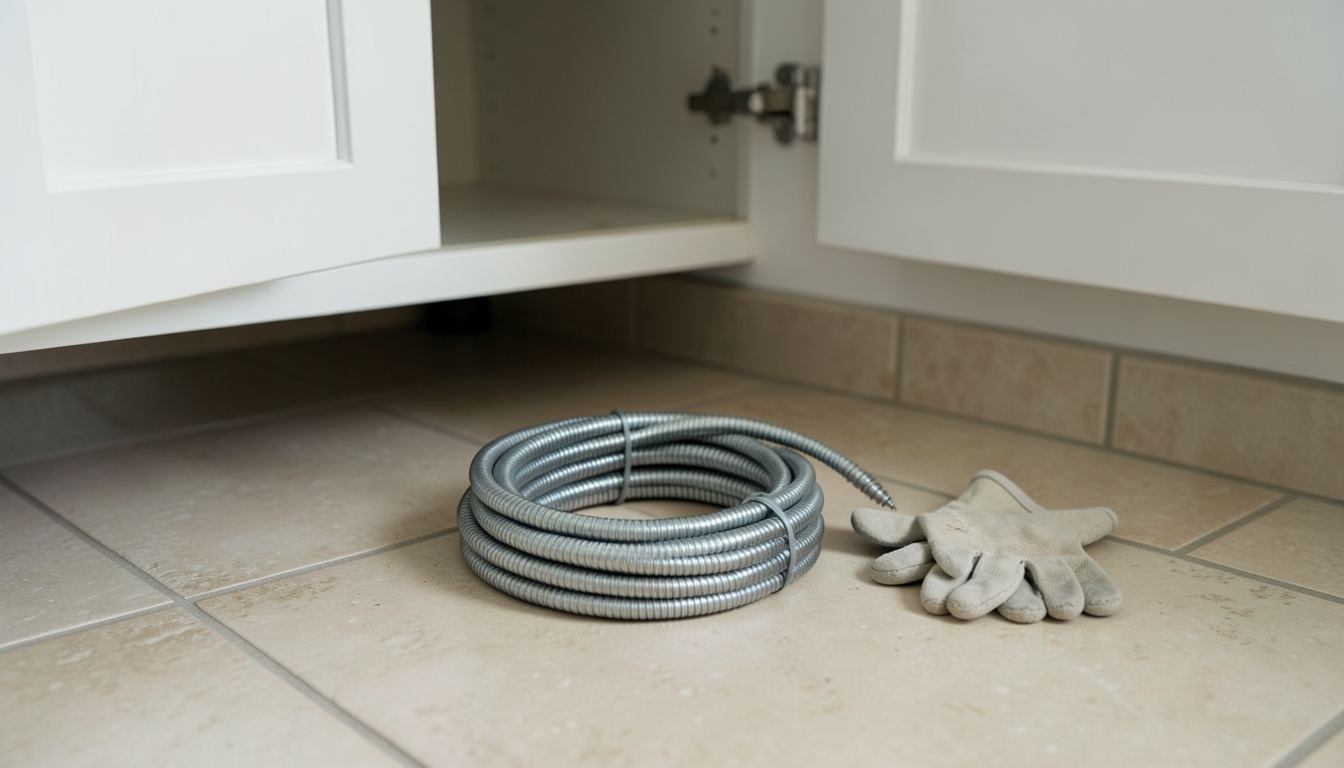
A hand snake, also sold as a drum auger or a drain auger. It's a 25 foot cable, about a quarter inch thick, coiled in a plastic drum with a crank. Hardware stores keep them near the plungers. You'll also want a bucket, an old towel, rubber gloves and a flashlight.
One warning before anything else. If you've poured a chemical drain cleaner into this drain, don't snake it. The cleaner is still in the standing water, and the cable will flick it at you. Read drain cleaner vs. a pro first.
Snaking a sink
Don't feed the cable down through the sink. The stopper, the crossbars and the tight U-bend under the sink all fight you. Go in under the sink instead.
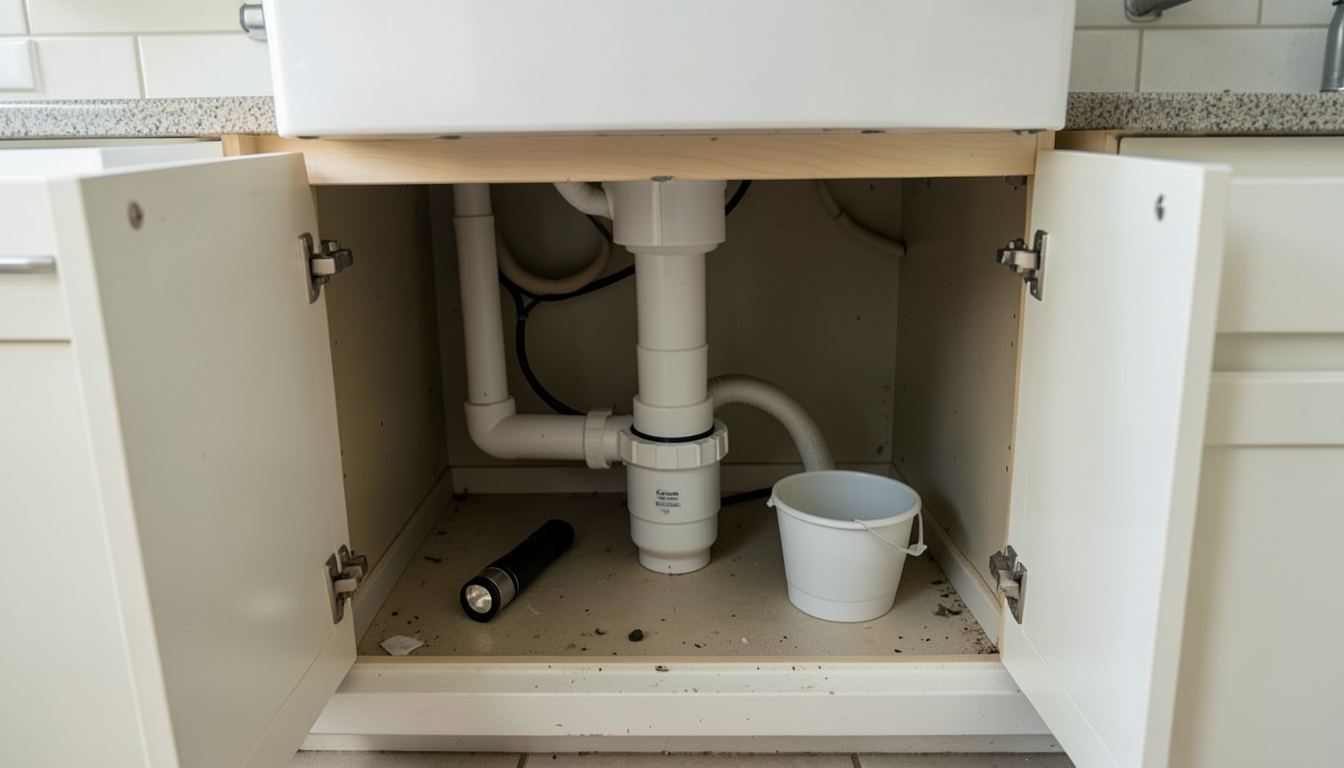
- Put the bucket under the U-shaped trap and unscrew the two slip nuts by hand. Empty the trap into the bucket
- Look in the trap. If it was packed solid, clean it, put it back and test the sink. You may be done
- If not, feed the cable into the pipe that goes into the wall. Push until it stops
- Lock the cable with the thumbscrew, leaving about six inches showing, and turn the crank clockwise while pushing gently
- When it moves forward, loosen the screw, feed more cable and lock it again. Repeat
- When you feel it bite into something soft and then break through, crank a few more turns and pull the cable back slowly, wiping it with the towel as it comes
- Refit the trap, hand tight. Run hot water for a couple of minutes and check the nuts for drips
Snaking a tub or shower
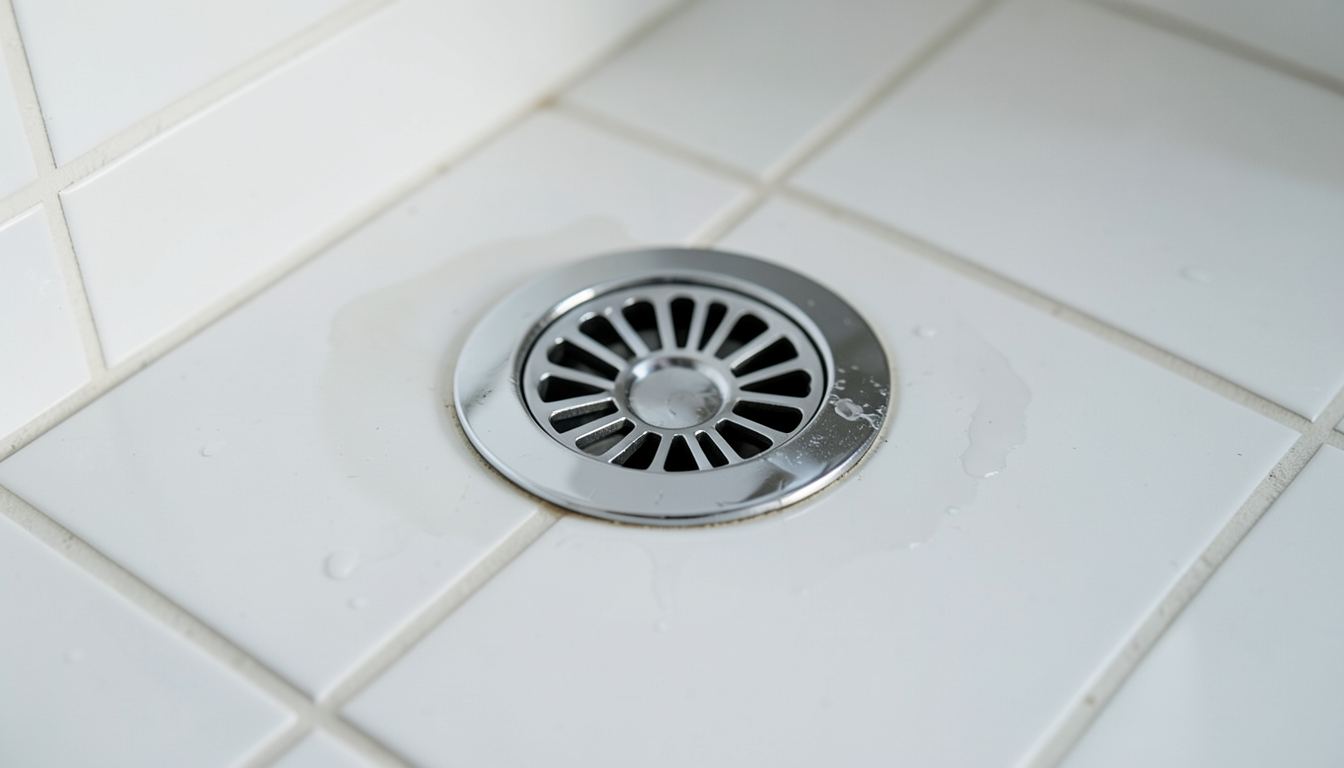
On a shower, unscrew or pry off the drain cover and pull out whatever hair you can reach first. Often that's the whole clog. If water still stands, feed the cable straight down the drain and work it the same way as a sink.
On a tub, go in through the overflow plate, the round cover under the faucet with one or two screws. Take it off, pull out the stopper linkage if there is one, and feed the cable down that opening. It's a straighter path to the trap than the drain is. Three or four feet of cable is usually enough.
Toilets need a different tool
Don't put a bare drain snake in a toilet. The steel scratches the porcelain, and the scratches turn gray and stay. Use a toilet auger, which has a rubber sleeve at the bend to protect the bowl and a cable just long enough to clear the toilet's own trap. Our clogged toilet page covers plunging and augering.
Five signs to stop and call
A hand snake is a small tool for small clogs. Put it down when you see any of these.
- More than one drain is slow or backing up. That's the main line, and 25 feet of thin cable won't reach or clear it
- The whole cable is in the pipe and you never felt a clog
- The cable comes back clean and the drain is still stopped
- The cable hits something hard and won't go past, however you turn it
- Sewage, not just gray water, is coming up anywhere in the house
If you call us
Tell us what you tried and how far the cable went. It saves time. A drain you've already snaked 25 feet tells us the clog is further down, and we'll bring the bigger cable. If you'd rather not do it yourself, see drain snaking, call (321) 604-1285 or request a quote.
And if the cable stopped at something hard, say that too. A pipe that has shifted or broken isn't a cleaning job. It belongs to a licensed plumber, and knowing early saves you paying for a cleaning that can't work.